






architects designing a building

Zoning, Concept Development & Schematic Design

Reliable exhaust systems safely remove pollutants from buildings. However, wind can create air flow patterns that direct exhaust back into nearby intakes or to other sensitive locations. An exhaust system is only safe and effective when pollutants no longer contaminate your building, nearby buildings, or areas where people spend time.

We will review the proposed mechanical design for your building and provide preliminary recommendations with respect to the placement of stacks and intakes in the context of the local climate and built environment. We will provide general guidance for the design of stacks in order to meet good engineering practice and to help minimize the need for extreme measures such as tall stacks, filters, scrubbers, etc. For high energy use exhausts, we will also consider methods to minimize energy consumption while maintaining a safe environment.

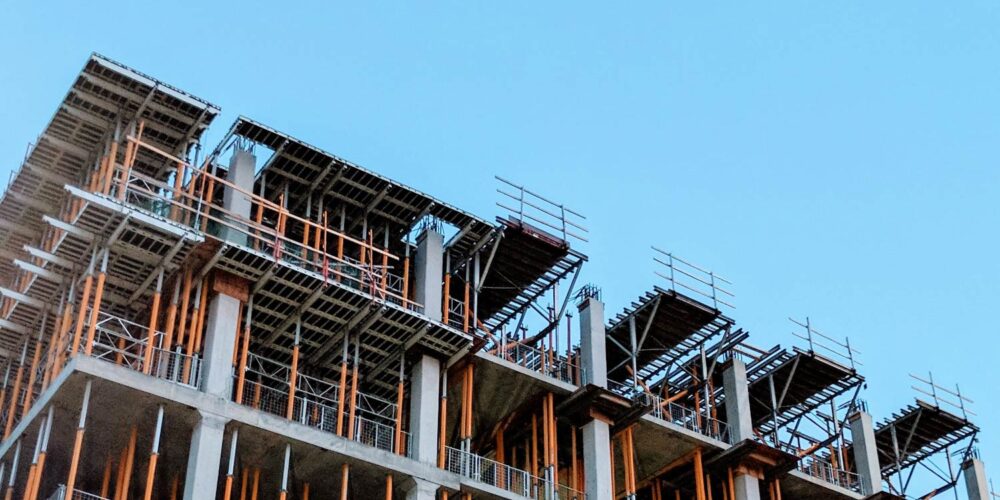
In the early stages of building design, our experts can provide a quick review of your buildings’ arrangement, in the context of the local built environment and meteorology, to identify potential wind comfort challenges and potential solutions. The advice can range from simple re-allocation of exterior space, to preliminary intervention concepts to aid in understating potential costs to be carried in the project budget.

In the early stages of design, our experts can provide an initial assessment of anticipated wind conditions at various proposed landing pad locations through application of experience with similar facilities and the local wind climate, as well as the Federal Aviation Administration report “Evaluating Wind Flow Around Buildings on Heliport Placement” co-authored by Dr. Jack Cermak (CPP Founder).

Stack effect is simultaneously one of the most useful and most problematic flow features in building design. Use it to your advantage, and the stack effect can enhance ventilation, improve exhaust dispersion, and make tall buildings more pleasant places to live and work. Ignore it, and you could end up with unusable doors, high heating and cooling costs, and disgruntled occupants.

In tall buildings located in cold climates, warm air rises from bottom to top, creating an upward draft. It hot climates, the opposite is true. We will review your plans, particularly with respect to planned openings near the bottom and top, and provide recommendations with respect to physical isolation or other means, including the likelihood of potential issues, to help the team identify and plan for stack effect.

In locations that regularly receive winter weather, snow loading and drifting can cause serious problems for buildings and structures. Building codes address snow in a generic fashion, but unique local wind patterns often encourage snow to accumulate in ways that a code simply cannot address. Fortunately, with our modern snow modeling and simulation services, you can rest assured that your project will survive the storm.

When snow falls on a building or structure in windy conditions, its weight creates loads that are frequently uneven. One part of a roof may experience little to no snow accumulation while others could receive several feet. Knowing which parts of your building are susceptible to snow loads saves you money by letting you focus resources just on those locations that need reinforcement. With CPP’s snow loading services, you’ll be prepared when the snow starts to fall.

Similarly, based on climate analysis and experience, we can identify snow/freezing-rain deposition patterns on building roof and facade surfaces that could have a potential for falling, sliding, or wind released ice and snow, posing a hazard to people and property.

In recent years, high frequency narrow-band wind pressure fluctuations have been observed in several recessed balcony configurations within some high-rise towers. Recessed balcony cavities with single orifice type openings located within curved façade tower geometries appear particularly prone to aero-acoustic-elastic cavity resonances analogous to sounding a woodwind instrument! These pressure fluctuations can produce excessive balcony façade vibration amplitudes at relatively low wind speeds, with noise and sub-audible throbbing reported on some recently completed tower projects.

CPP research has found high-frequency and narrow-band Rossiter aerodynamic excitations under glancing incident winds can harmonize and compete with recessed balcony volume acoustic Helmholtz modes and facade elastic responses. A Cavity Amplification Factor methodology to account for façade resonant inertial wind loads resulting from these balcony cavity resonances has been developed drawing upon field observations and the results of full-scale monitoring and model-scale wind tunnel tests.

With this knowledge, CPP experts can identify potential for aero-acoustic-elastic cavity resonances to occur on newly proposed developments and provide preventative recommendations. Our experts can diagnose resonance problems occurring on existing buildings and provide mitigation options.

More Services from CPP

Developers planning a building
constructed building under renovation

More Solutions from CPP

Sydney Opera House

Hospitality, Entertainment & Institutional

data center

Data Centers