



Sustainable Solar Farm

Services for Solar Structures

The continued development of technologies makes solar energy an increasingly attractive sustainable energy solution; however, wind effects play a surprisingly complex role in the design of solar infrastructure. That’s where we come in.

We pioneered many of the current best practices that dictate how engineers design for wind, and we work closely with professionals in the solar industry to ensure that our recommendations are relevant to solar arrays and other solar products in the current market.

Our services range from product-specific, important during the design of the racking structure for use at any site, to site-specific when implementing the design at a specific solar plant. The latter includes consulting on important aspects of the plant design such as design wind speed, local wind directionality, topographic effects, assessing stow strategy, and ensuring that anemometers are well sited so that system reliability is understood.
Types of Wind Loading

Wind loading on solar structures is frequently divided into static loads, representing the excitation from the wind, and dynamic loads, representing the inertial loads imparted by the vibration of the structure.

Engineers designing utility-scale ground mount racking systems frequently have the option of turning to a wind loading standard such as ASCE 7-22 for design of the system, but it is common for the codified methods to be too crude or conservative to allow for a competitive design. In some countries, the applicable code or standard may not have specific procedures for solar structures, in which case trying to approximate wind loads from the generic structures can be extremely inaccurate. As a result, it is most common for wind loads to be determined from a wind tunnel test of a scale model of the system being designed.

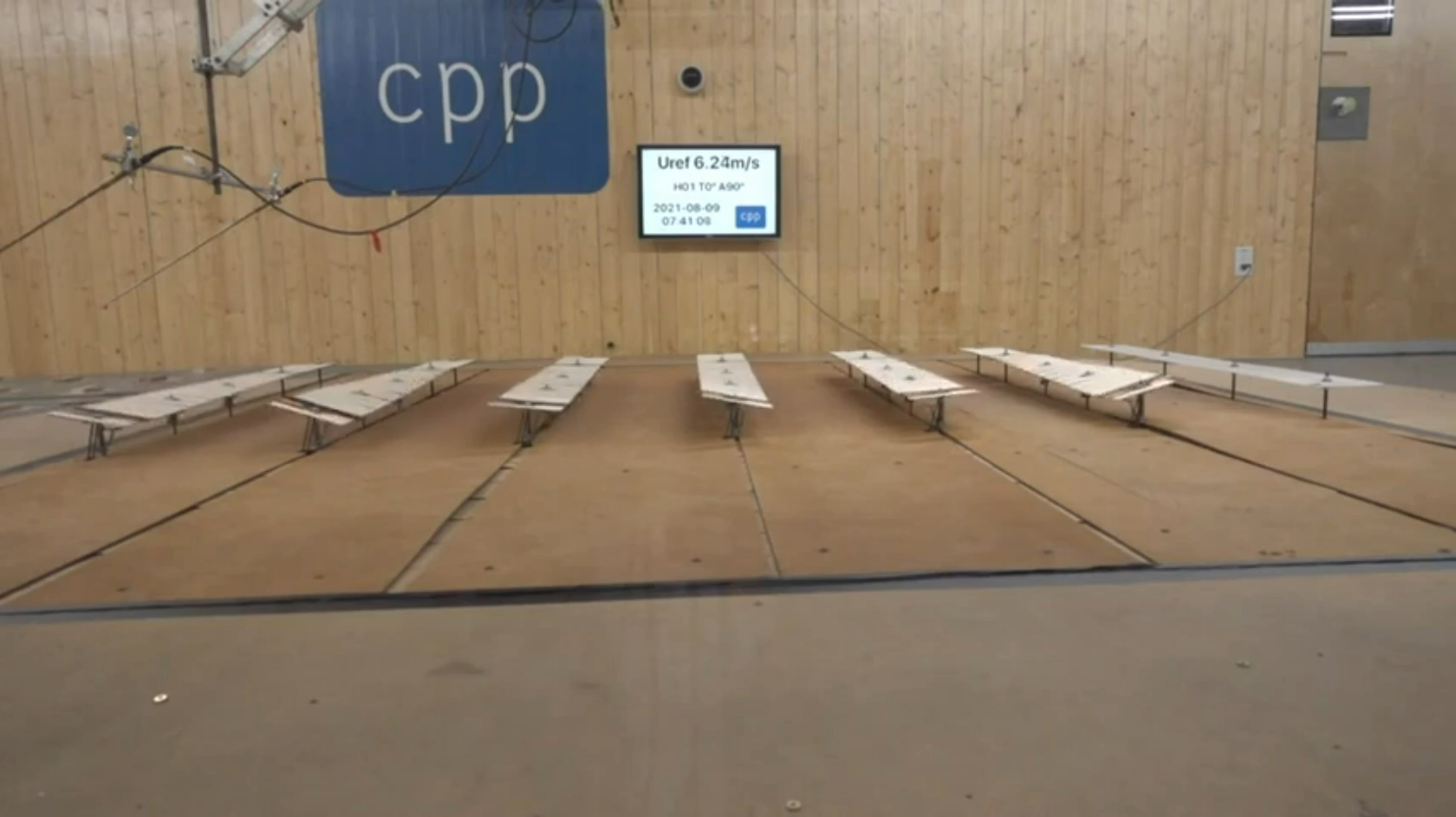
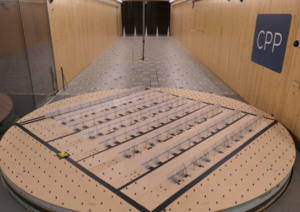
The typical wind tunnel model type for determining wind loads is a rigid pressure model in which surface pressures are measured on the top and bottom surfaces of the PV modules. The models are typically arranged in a generic array that is big enough to capture edge effects as well as the lower loads in the interior part of the array. The effect of self-excitation and buffeting from vortex shedding from upwind rows is also captured.

With high-frequency pressure measurements, the wind tunnel data can then be analyzed to produce static load cases pertaining to the specific components of the system being designed. Determining what load effects are important is achieved through conversation with the structural engineer.

Beyond the static loads, the vibration of the system can induce inertial loads that significantly increase the total loads that the structure must resist. These dynamic loads are extremely sensitive to the high-energy frequency ranges caused by vortex shedding.

When the vortex shedding frequency is close to the system’s natural frequency, the inertial loads can be extreme. Designing the system based only on the static loads would result in a lighter more flexible structure, which would be more sensitive to dynamic effects. Ignoring or underestimating these dynamic loads can lead to catastrophic failure.

solar tracker wind tunnel testing

With wind tunnel pressure model data, it is most common to account for the potential for dynamic (inertial) loads through combination of the static load excitation and the modes of vibration provided by the structural engineer. Dynamic loads vary with mode shape, natural frequency, and damping ratio.

It is critical that the potential for dynamic loads be considered in concert with the static loads and not after decisions have been made about material gauges. Dynamic loads can significantly increase total loads above the assumed static value.

Aeroelastric Testing for Instability

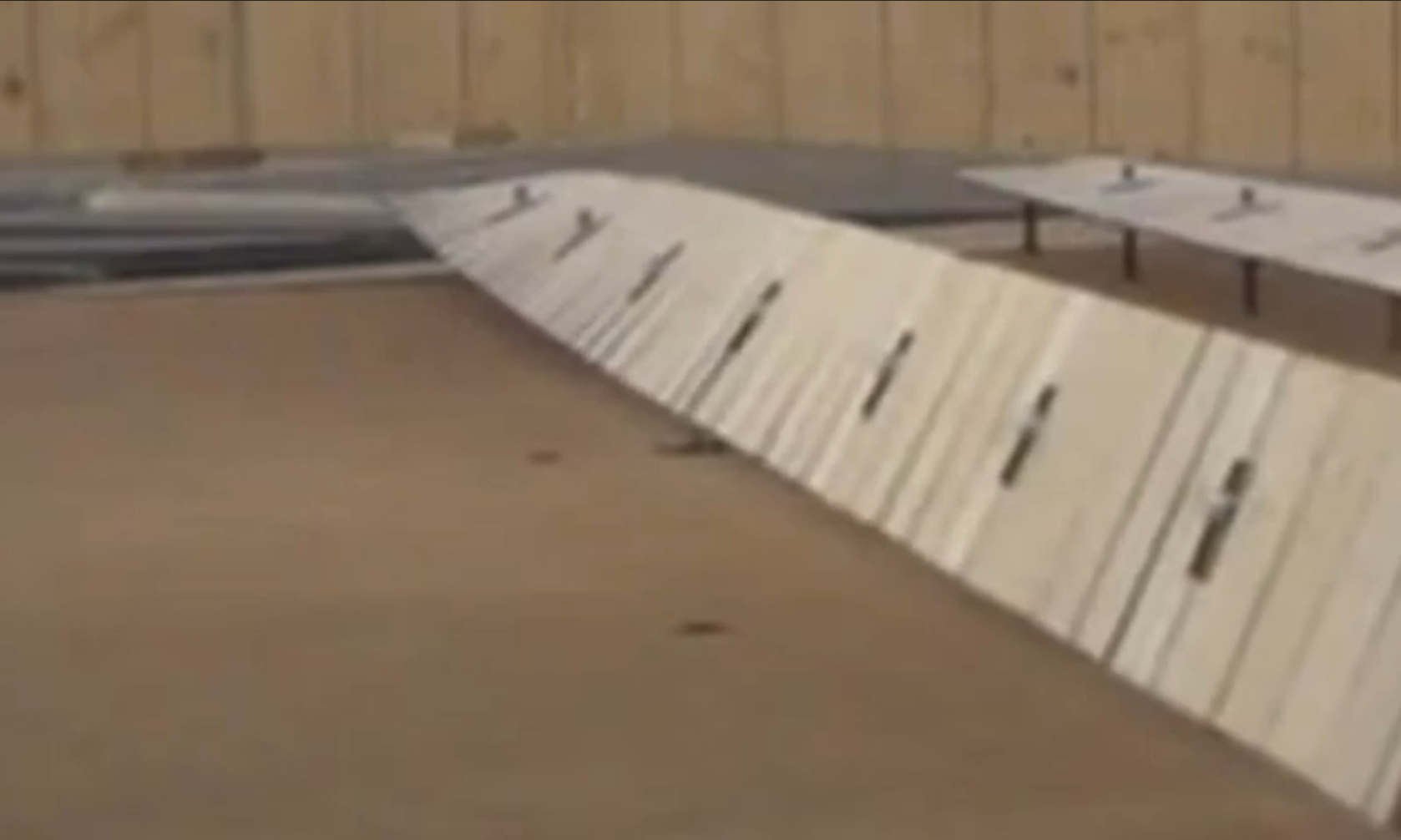
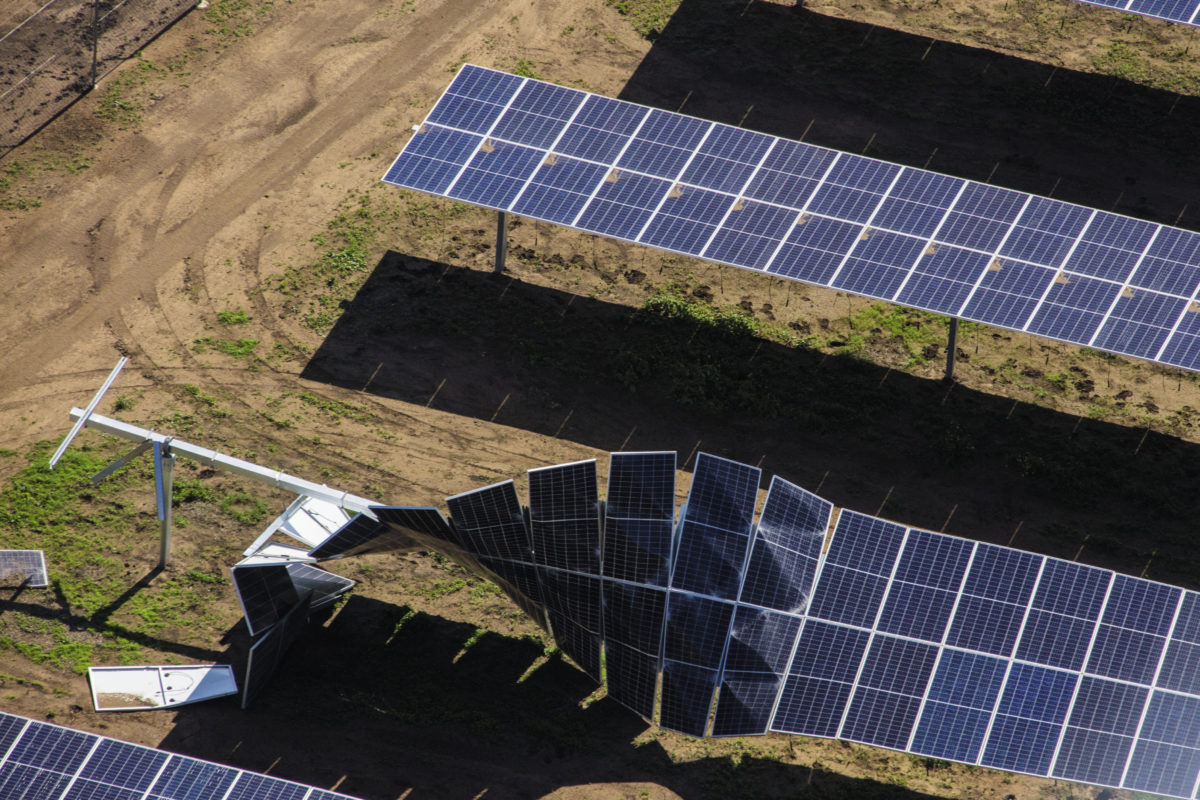
Wind damage to solar tracking systems has appeared on various online forums and social media in recent years. These videos or pictures illustrate the catastrophic failures of multiple trackers over a site. The observed failures often happen in wind speeds well below the site design wind speeds.

In CPP Wind’s experience, most of these failures are due to the aeroelastic instability of the tracker system. This instability occurs when the wind loads change for the worse in response to the wind deflection of the system, creating a feedback loop. Once critical wind speeds are exceeded, tracker twisting will increase until a component or multiple components of the system fail. Most trackers are long and very flexible structures prone to this type of instability. However, this type of failure is avoidable with the right stow policy and design.

aeeroelastic solar panel failure

Watch Aeroelastic Testing in Our Wind Tunnel

More Energy Solutions

EPC working with solar panels
Renewable Energy from solar panels